
Wireless and cabled networks are two fundamental types of computer networking that enable devices to communicate and share resources. While both serve the same purpose, they differ significantly in terms of transmission medium, performance, reliability, security, and cost. Understanding these differences is important when choosing the most suitable network for a particular environment.
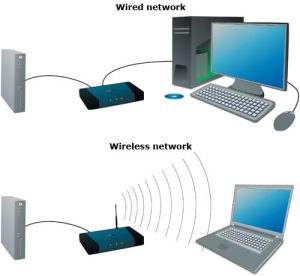
A cabled network, also known as a wired network, uses physical cables such as Ethernet to connect devices. These cables transmit data through electrical signals or light (in the case of fiber optics). One of the main advantages of cabled networks is their high speed and stability. Because the connection is direct and not affected by interference, wired networks typically provide faster data transfer rates and more consistent performance. This makes them ideal for environments that require reliable connectivity, such as offices, schools, and data centers.
In contrast, a wireless network uses radio waves to transmit data between devices without the need for physical connections. Devices connect through technologies such as Wi-Fi, allowing users to access the network from various locations within a certain range. The greatest advantage of wireless networks is mobility. Users can move freely with laptops, smartphones, and tablets without being restricted by cables. This flexibility makes wireless networks popular in homes, public places, and businesses that prioritize convenience.
However, wireless networks generally have lower performance compared to cabled networks. Signal interference from walls, electronic devices, and other wireless networks can affect speed and reliability. As more devices connect to the same wireless network, performance may decrease. On the other hand, cabled networks maintain consistent speeds regardless of the number of connected devices, provided the infrastructure is properly designed.

Security is another important difference. Cabled networks are generally more secure because access requires a physical connection to the network. Unauthorized users cannot easily tap into the network without direct access to the cables. Wireless networks, however, are more vulnerable to hacking if not properly secured. Encryption methods such as passwords and network security protocols are essential to protect wireless connections.
Cost and installation also vary between the two. Cabled networks can be more expensive and time-consuming to install, especially in large buildings, due to the need for extensive wiring. Wireless networks are easier and cheaper to set up, as they require fewer physical components.
Both wireless and cabled networks have their advantages and disadvantages. Cabled networks offer speed, stability, and security, while wireless networks provide flexibility and convenience. The choice between them depends on the specific needs and environment of the user.
