
Artificial intelligence (AI) is one of the most transformative developments in modern technology, reshaping how people live, work, and interact with the world. At its core, AI refers to the ability of machines and computer systems to perform tasks that typically require human intelligence, such as learning, reasoning, problem-solving, and decision-making. Rooted in fields like computer science and data science, AI has evolved rapidly due to advances in computing power, large datasets, and sophisticated algorithms.
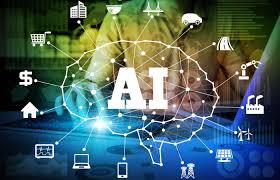
A key component of AI is machine learning, which allows systems to learn from experience without being explicitly programmed. Through techniques such as supervised and unsupervised learning, machines can identify patterns in data and improve their performance over time. Another important branch is deep learning, which uses layered neural networks to process complex data like images, audio, and natural language. These technologies have enabled breakthroughs in areas such as speech recognition, image classification, and autonomous systems.
AI is now widely used across many industries. In healthcare, it assists doctors in diagnosing diseases and predicting patient outcomes, improving both speed and accuracy. In finance, AI helps detect fraud, automate trading, and assess risks. The transportation sector has seen the rise of self-driving vehicles, where AI systems analyze real-time data to navigate roads safely. Additionally, AI plays a major role in everyday applications such as virtual assistants, recommendation systems, and customer service chatbots, making digital interactions more personalized and efficient.

Despite its many benefits, artificial intelligence also raises important ethical and social concerns. Issues such as data privacy, algorithmic bias, and job displacement are widely discussed. For example, AI systems trained on biased data can produce unfair outcomes, which may reinforce existing inequalities. Furthermore, the automation of tasks traditionally performed by humans has led to concerns about unemployment and the future of work. These challenges highlight the need for responsible AI development, including transparent systems, ethical guidelines, and regulatory frameworks.
Another important concept in AI is natural language processing, which enables machines to understand and generate human language. This technology powers applications like language translation, sentiment analysis, and conversational agents. It has significantly improved communication between humans and machines, making technology more accessible to a broader population.
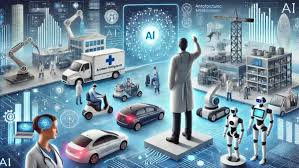
Looking ahead, the future of artificial intelligence holds enormous potential. Continued advancements could lead to more intelligent systems capable of solving complex global challenges, such as climate change, disease outbreaks, and resource management. However, achieving these benefits requires a balanced approach that considers both innovation and ethical responsibility.
In conclusion, artificial intelligence is a powerful and rapidly evolving field that is transforming industries and everyday life. While it offers significant advantages in efficiency, accuracy, and innovation, it also presents challenges that must be carefully managed. As AI continues to develop, it will play an increasingly important role in shaping the future of society.