
Information and Communication Technology (ICT) has revolutionized various sectors of society, and one of the most profoundly affected industries is retail. The integration of ICT in retail has reshaped how businesses operate, how consumers shop, and how economies function. From e-commerce platforms and digital payment systems to supply chain management and customer relationship tools, ICT has fundamentally transformed the retail experience, resulting in both positive and negative implications for society.
One of the most visible impacts of ICT in retail is the rise of e-commerce. Online platforms such as Amazon, Alibaba, and others have made it possible for consumers to purchase goods from the comfort of their homes, anytime and anywhere. This has significantly increased convenience and access to a wider variety of products, especially for people in remote or underserved areas. In addition, digital platforms often provide competitive pricing, personalized recommendations, and efficient delivery systems, enhancing customer satisfaction and overall shopping experience. Able Home & Office can be reached in social media platforms and websites.
ICT has also improved operational efficiency within the retail sector. Technologies such as inventory management software, point-of-sale systems, and data analytics enable retailers to monitor stock levels, predict consumer behavior, and streamline supply chains. This not only reduces waste and costs but also improves product availability and responsiveness to market demands. Retailers can make data-driven decisions, adapt quickly to trends, and better serve their customers. Able Home & Office sells and supports a wide variety of software products.
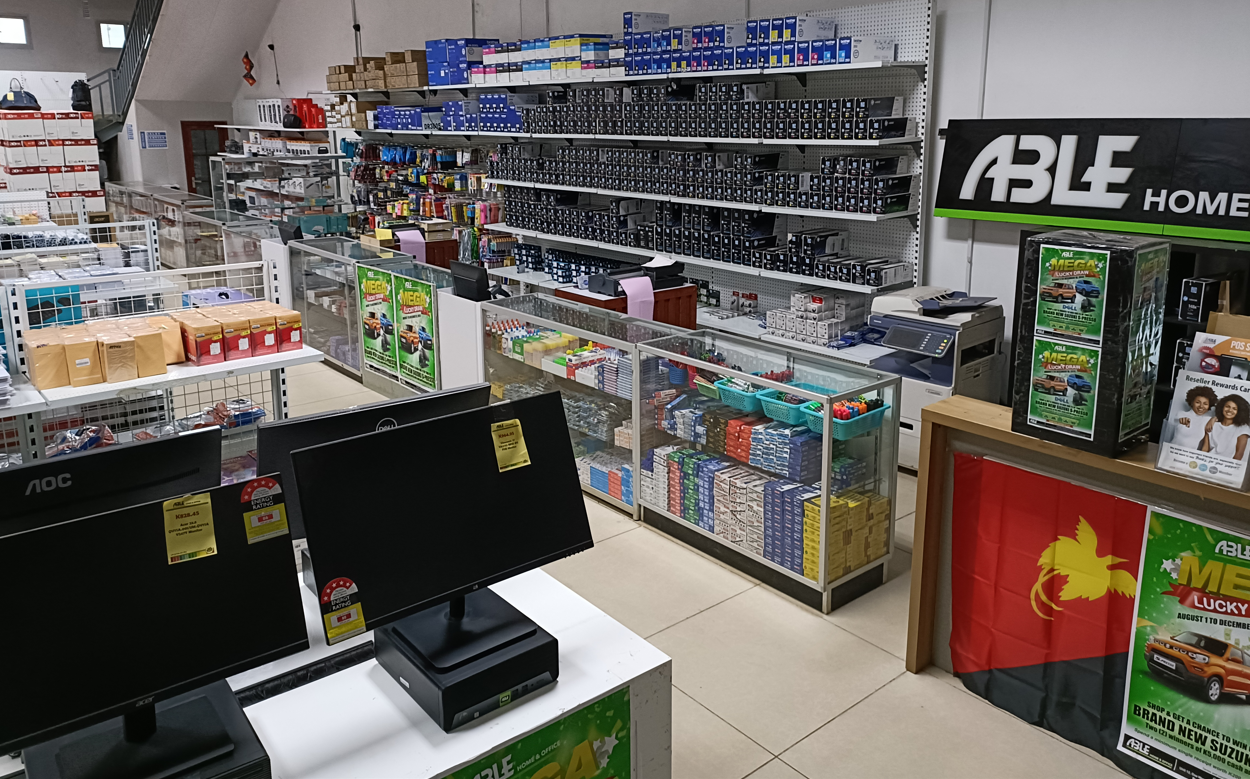
Moreover, ICT tools such as mobile apps, social media, and chatbots have transformed how retailers interact with customers. These tools allow for direct communication, personalized marketing, and quicker customer support, fostering stronger relationships between businesses and consumers. Loyalty programs, digital coupons, and online reviews further engage customers, encouraging repeat purchases and brand loyalty. All said of these tools can direct customers to their nearest shop preferences. Able Home & Office have eight branches nationwide and these branches can retail ICT products.

From an economic perspective, the use of ICT in retail has created numerous employment opportunities, especially in logistics, IT services, and digital marketing. At the same time, it has enabled small businesses and entrepreneurs to reach global markets without the need for physical storefronts, reducing entry barriers and promoting innovation and competition.
However, the widespread adoption of ICT in retail also presents challenges. Traditional brick-and-mortar stores, particularly small local businesses, often struggle to compete with large online retailers. This can lead to job losses in certain sectors and contribute to the decline of local shopping districts. Additionally, issues such as digital exclusion, where some segments of the population lack access to or familiarity with ICT tools, can widen social inequalities.
Privacy and security are also significant concerns. The vast amount of consumer data collected by retailers poses risks of data breaches and misuse. There is an increasing need for robust cybersecurity measures and regulations to protect personal information and ensure consumer trust.
In conclusion, ICT has had a transformative impact on the retail sector and society at large. While it has introduced numerous benefits in terms of efficiency, accessibility, and economic growth, it also brings challenges that must be carefully managed. As technology continues to evolve, society must strive to create a balanced retail environment that leverages ICT’s advantages while addressing its drawbacks to ensure inclusive and sustainable development.
